
Dambulla Cave Temple
Sri Lanka’s Largest Cave Temple Complex & UNESCO World Heritage Site
About Dambulla Cave Temple
The Dambulla Cave Temple, also known as the Rangiri Dambulla Temple, is one of Sri Lanka’s most treasured cultural landmarks and a UNESCO World Heritage Site. Dating back over 2,000 years, this magnificent cave monastery shelters more than 150 Buddha statues, intricate murals, and ancient inscriptions spread across five spectacular cave shrines. Perched on a massive granite rock overlooking the plains of Dambulla, the temple has played a vital role in Sri Lankan history, serving as a royal refuge for King Valagamba and later evolving into a major center of Buddhist worship and artistic heritage. Its unmatched combination of archaeological significance, religious devotion, and breathtaking artistry makes Dambulla one of the most awe-inspiring cultural destinations in the country.
Key Highlights
- UNESCO World Heritage Site and Sri Lanka’s largest cave temple complex
- Over 150 Buddha statues and intricately painted murals
- Five major cave shrines with stunning preserved artwork
- Panoramic views from the granite rock summit
- Historical refuge of King Valagamba
- Continuous Buddhist worship for over two millennia
Top Experiences
Things To Do
- Tour the five main cave temples
- Photography of ancient murals and Buddha statues
- Climbing the rock pathway to the summit
- Visiting the museum at the temple entrance
- Observing cultural rituals and offerings
- Enjoying the panoramic viewpoints
Photo Gallery
A visual journey through Dambulla Cave Temple
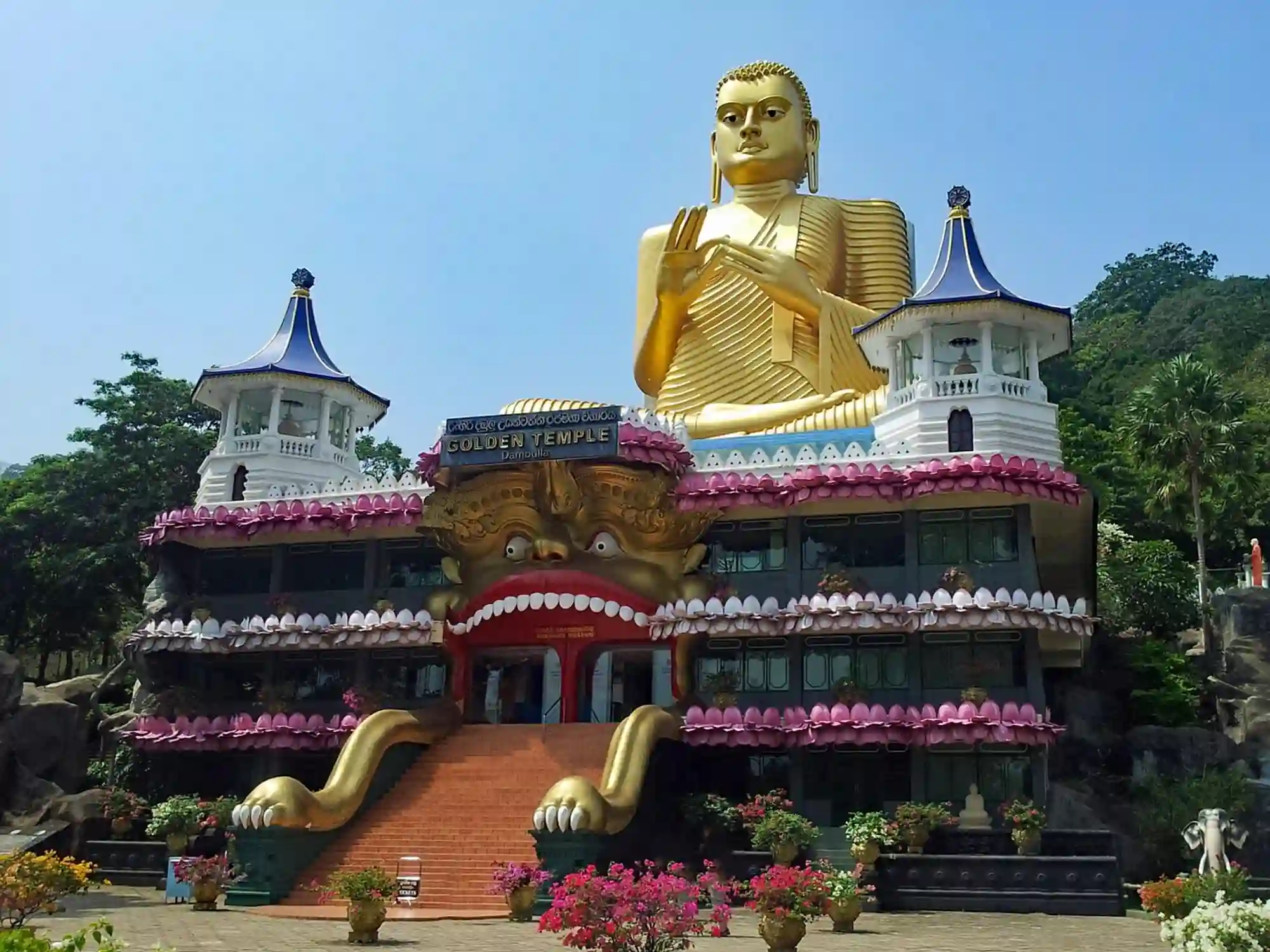
Golden Temple of Dambulla on a Clear Day
The impressive Golden Temple façade, crowned by a giant seated Buddha statue, welcomes visitors at the base of the Dambulla Cave Temple complex.
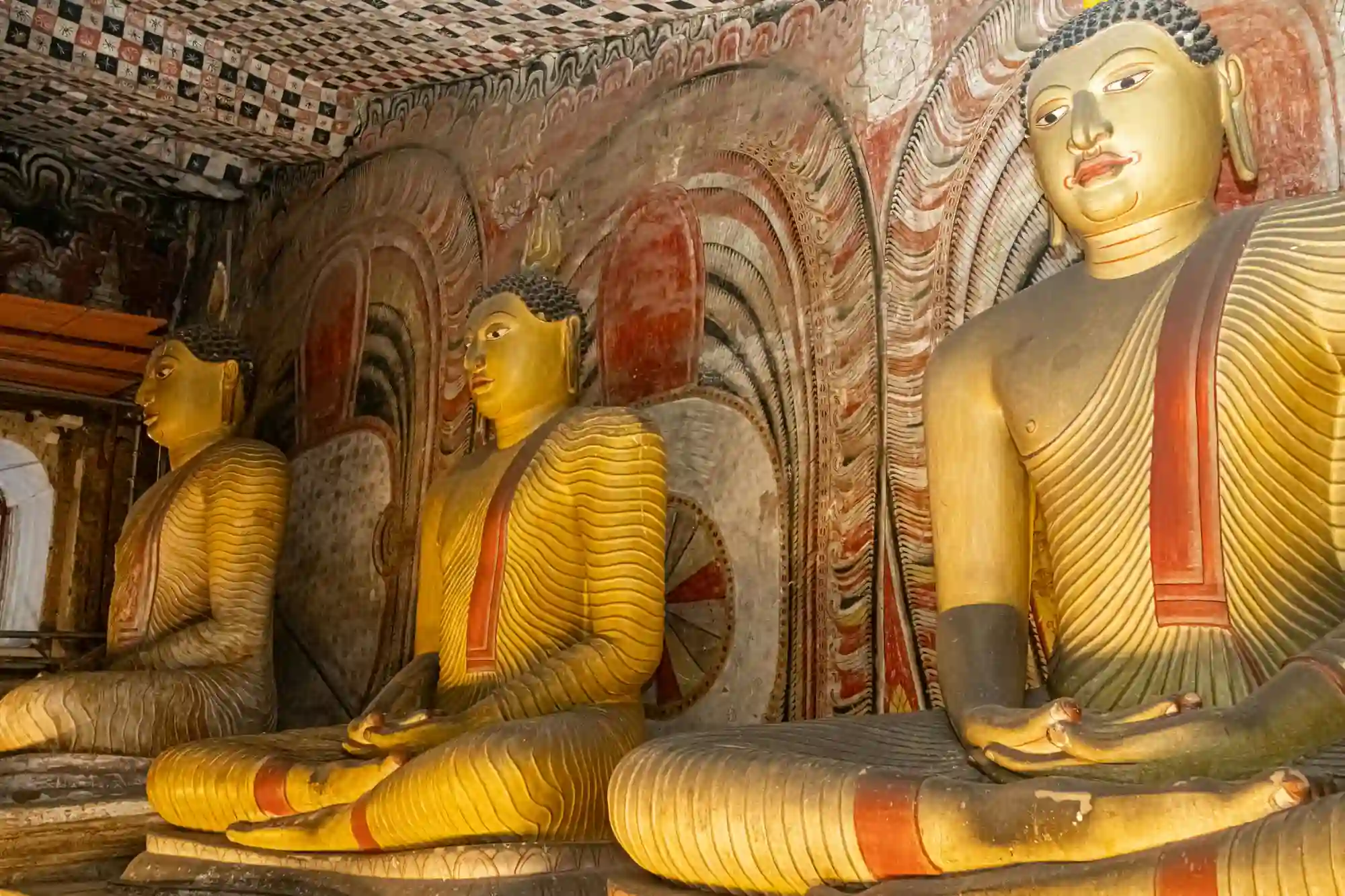
Seated Buddha Statues Inside the Cave Shrine
A row of serene seated Buddha statues set against intricate mural paintings, highlighting the fine craftsmanship inside Dambulla’s cave shrines.
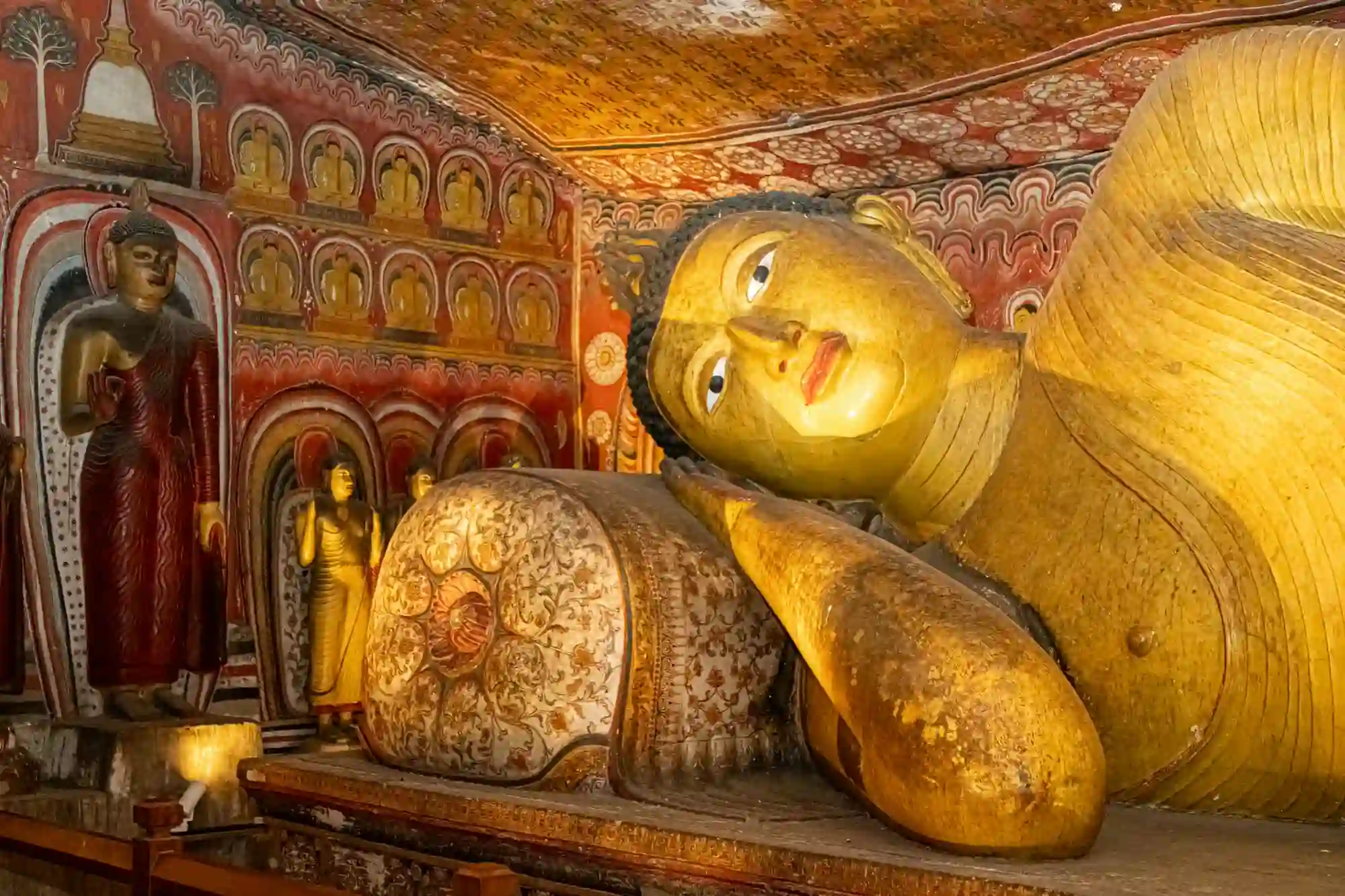
Reclining Buddha Statue in the Cave
The magnificent reclining Buddha, carved directly from the rock, lies surrounded by vivid murals depicting scenes from the Buddha’s life.
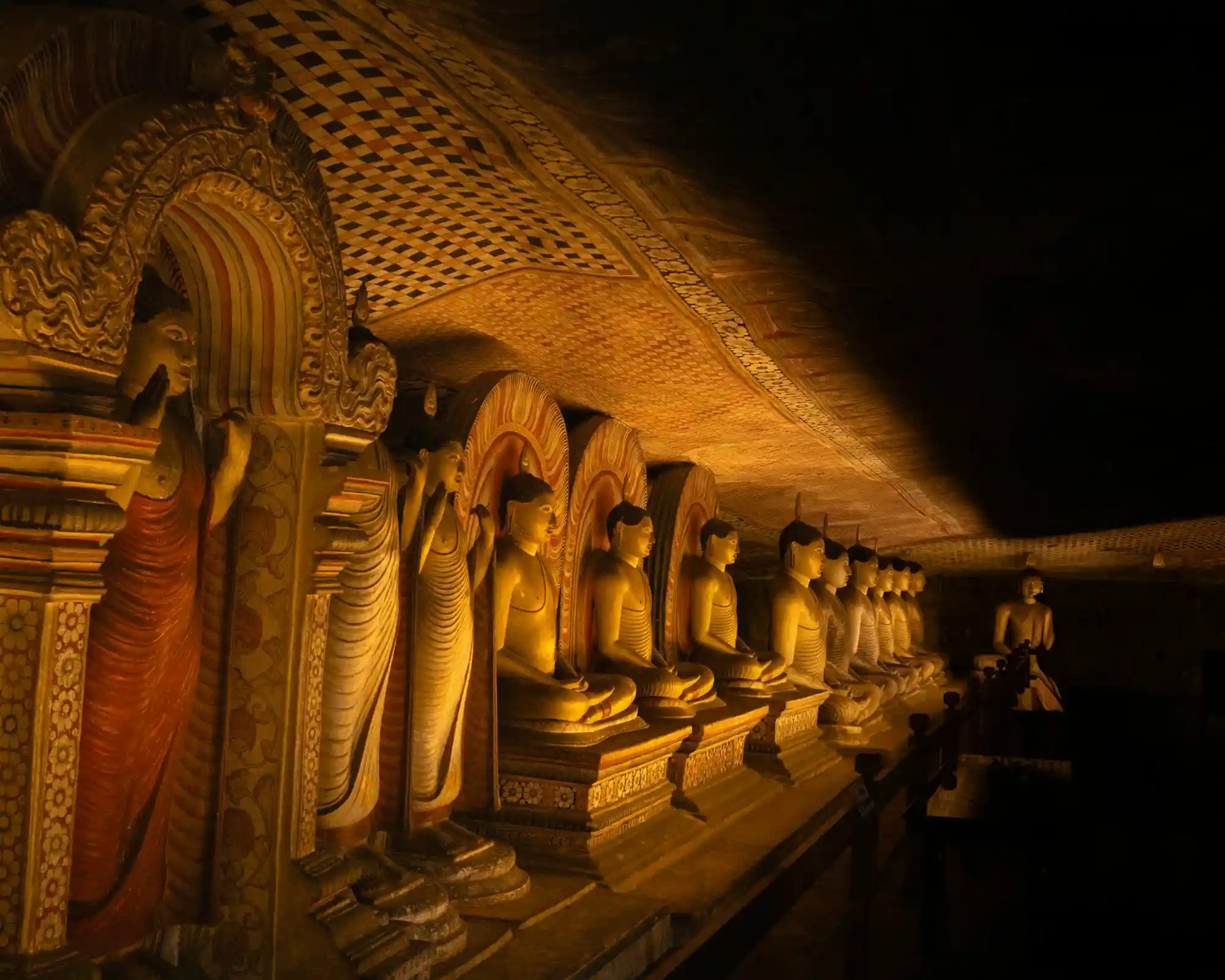
Illuminated Cave Hall with Buddha Statues
Warm light reveals a long line of Buddha statues inside the cave, creating a deeply atmospheric and contemplative space.
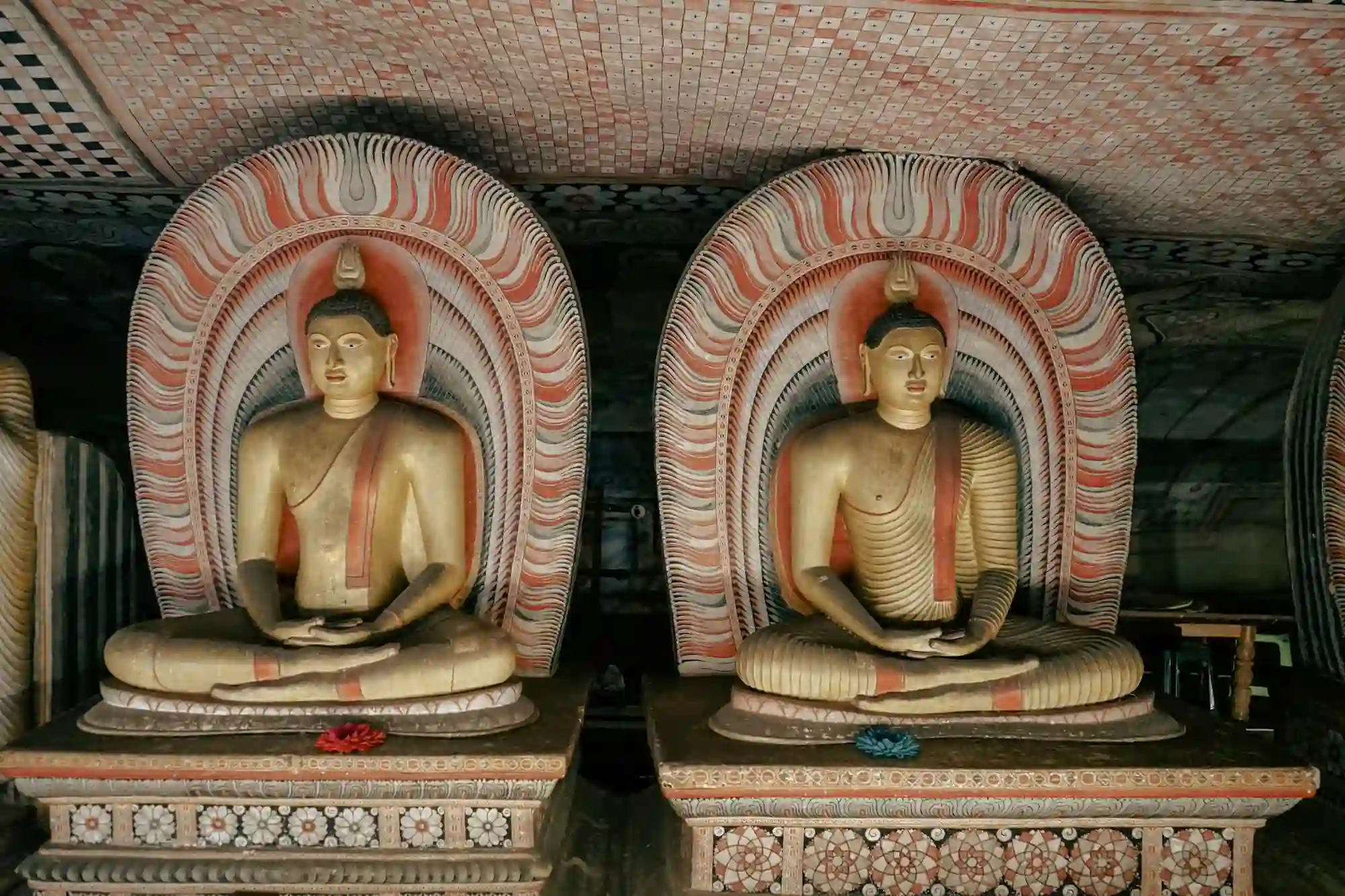
Twin Seated Buddha Statues with Ornate Halos
Twin Buddha images framed by elaborate halo patterns showcase the intricate detail and symmetry of Dambulla’s sacred art.
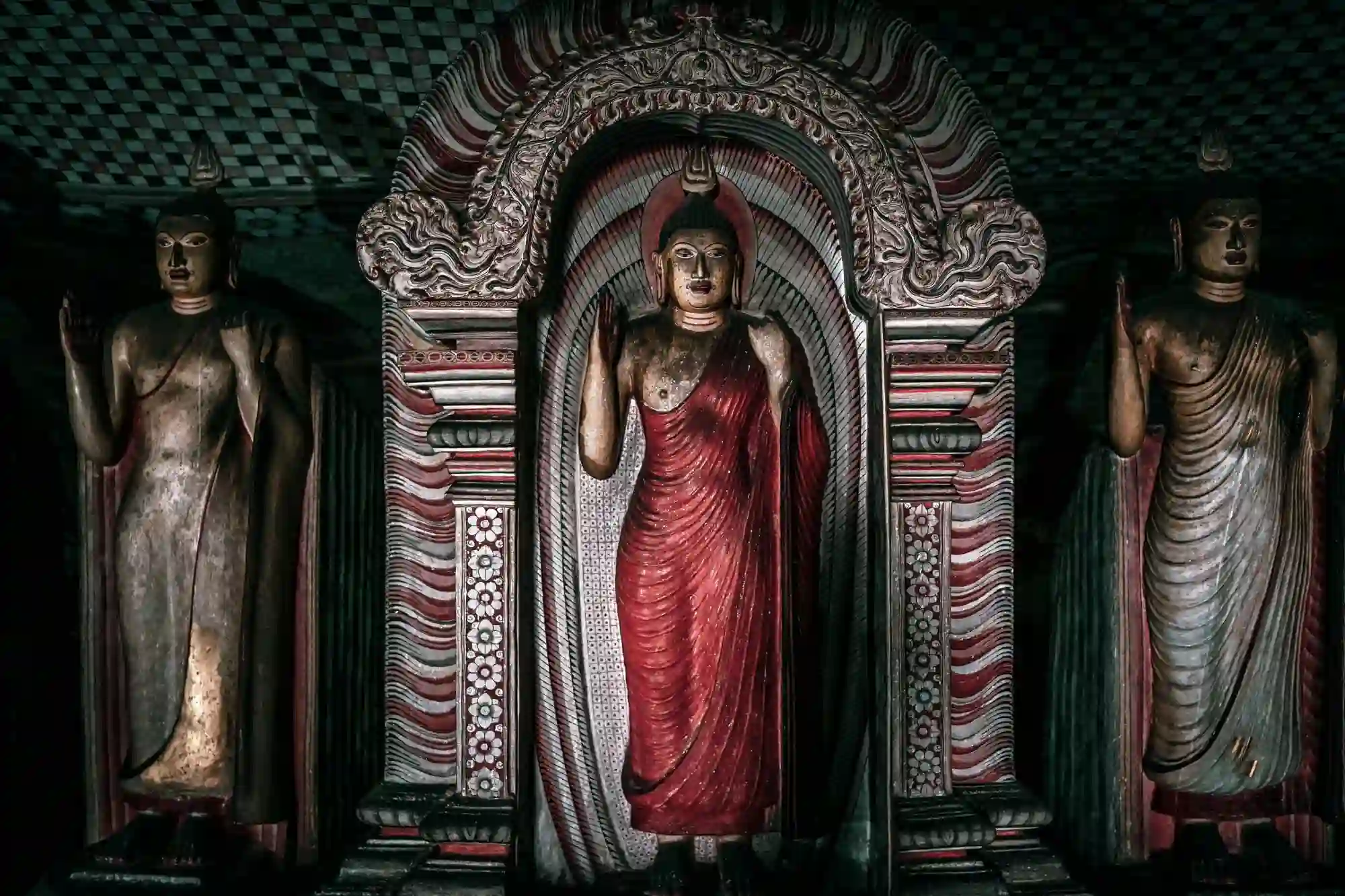
Standing Buddha in Red Robe
A striking standing Buddha dressed in a red robe, framed by a richly carved archway and surrounded by patterned cave ceilings.
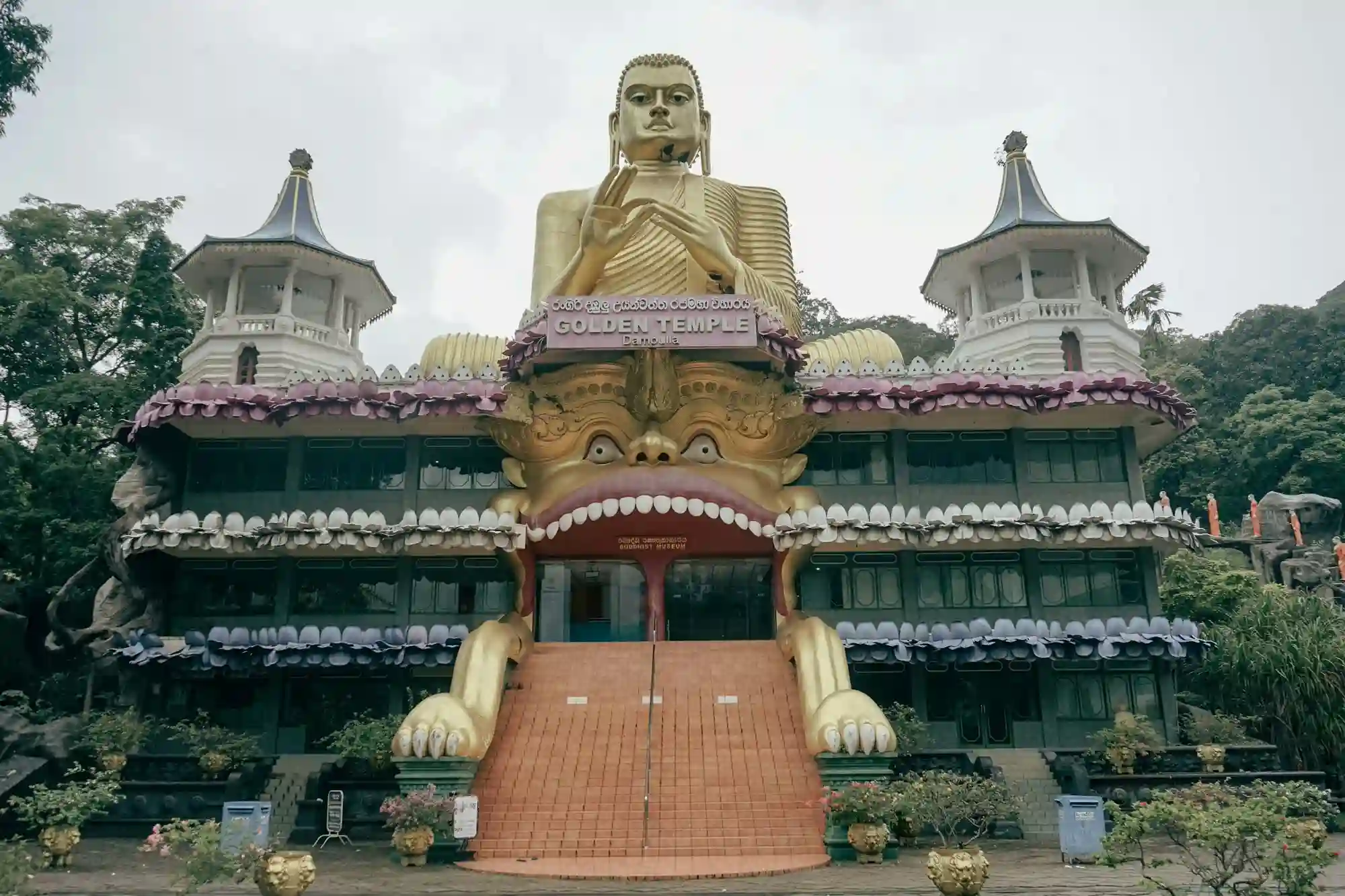
Golden Temple Entrance – Front View
A frontal perspective of the Golden Temple emphasizes its unique architecture, lotus-petal motifs, and towering golden Buddha image.
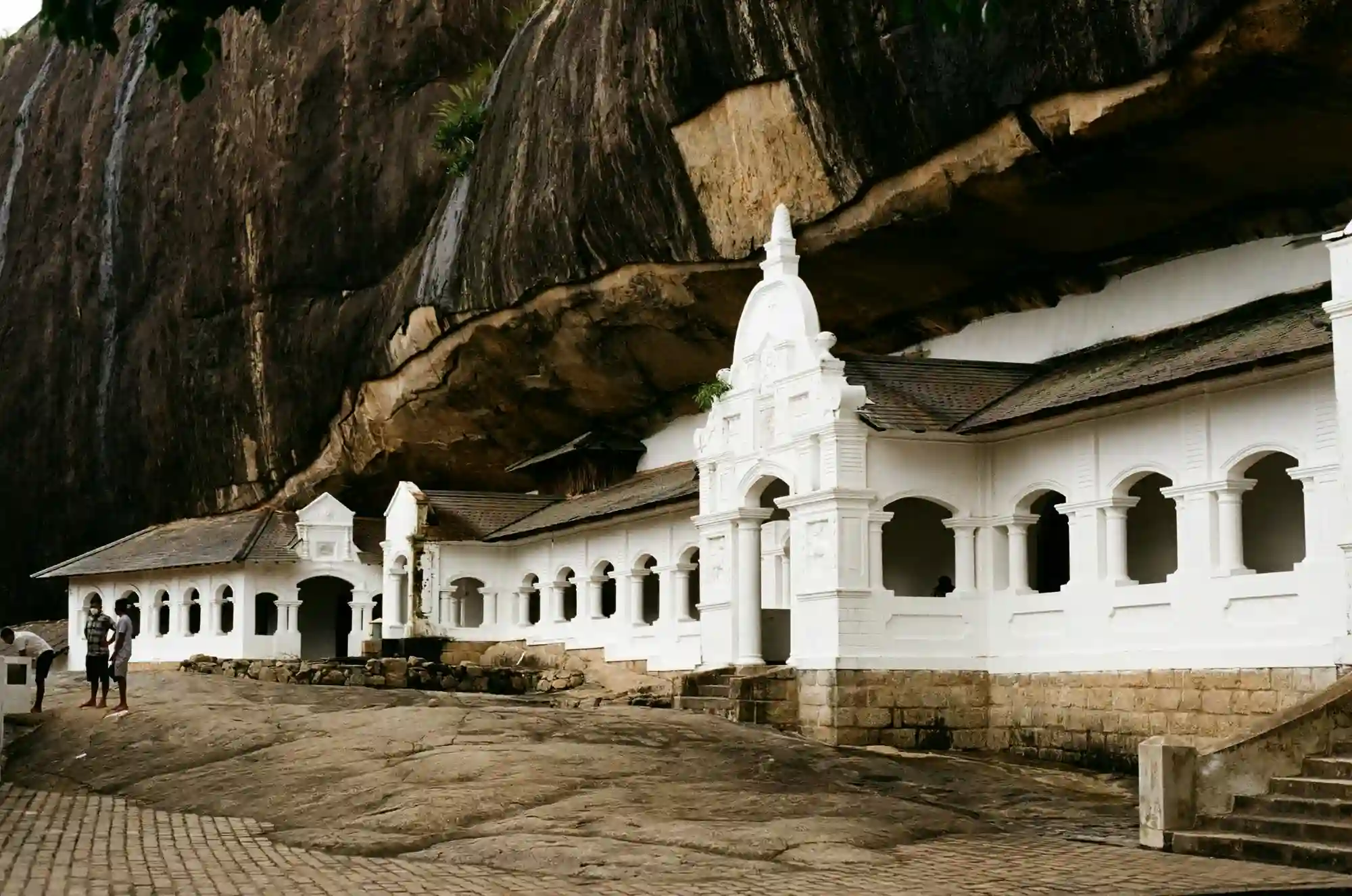
White Cave Temple Facade Under the Rock
The whitewashed façade of the cave temple monastery stretches beneath the rocky overhang, blending seamlessly into the natural cliff face.